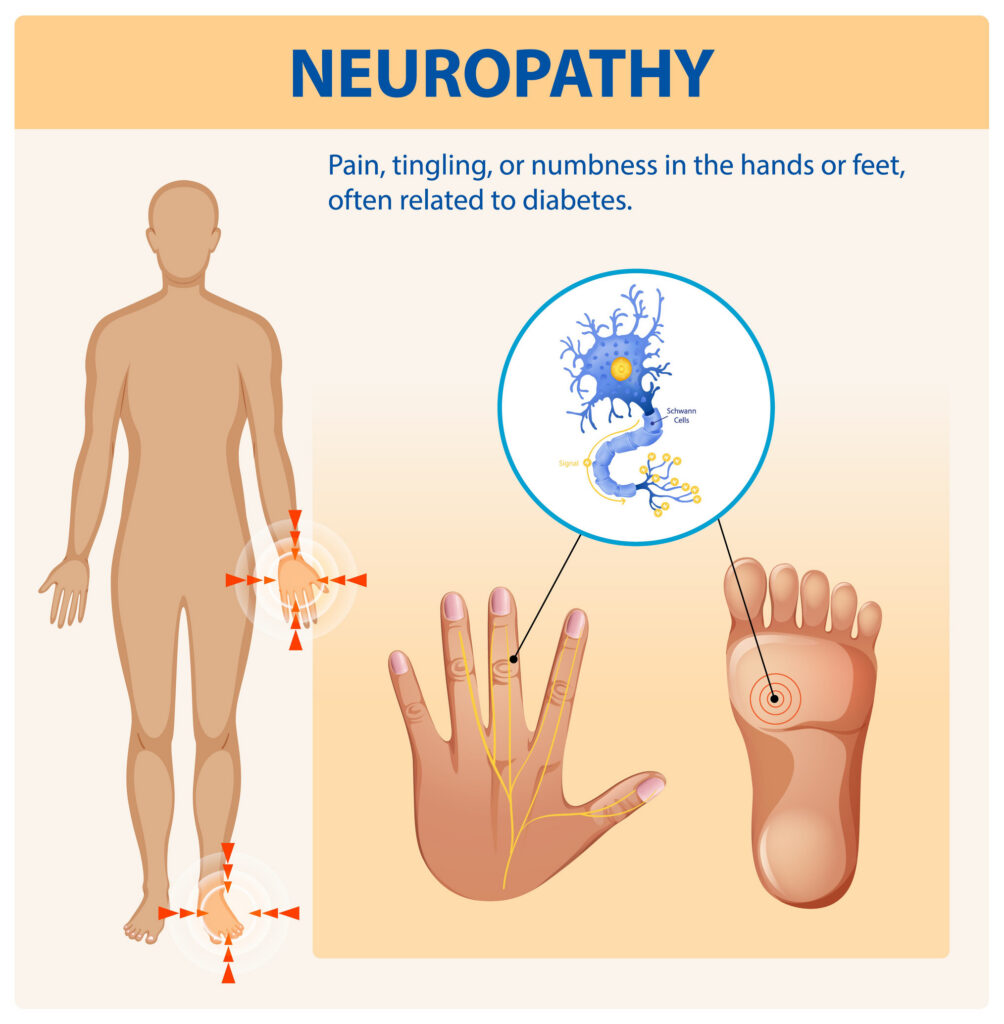
Neuropathy can show up as tingling, burning, numbness, or weakness—often in the hands or feet. For some people, it’s mild and occasional. For others, it becomes constant and starts interfering with sleep, walking, or daily activities.
If you’ve been dealing with nerve-related symptoms and aren’t sure what’s causing them, you’re not alone—and you don’t have to just “live with it.”
Our goal is simple: identify what may be contributing to your symptoms and help you move toward better function and comfort.
Neuropathy refers to damage or dysfunction of the nerves. When nerves aren’t working properly, they can send incorrect signals—or no signals at all.
That’s why symptoms can vary so much from person to person.
Some people feel:
Neuropathy is not a single condition—it’s a symptom of an underlying issue, which is why proper evaluation is key.

There are many possible reasons nerve symptoms develop. Some of the most common include:
In some cases, multiple factors may be involved.
That’s why a one-size-fits-all approach doesn’t work.
Chiropractic care does not treat or cure neuropathy directly. However, it may help support the nervous system and improve how your body functions—especially when nerve irritation or mechanical stress is involved.
Care may focus on:
For patients whose symptoms are influenced by nerve compression or movement dysfunction, this type of approach can be a helpful part of a broader plan.
We start by understanding exactly what you’re feeling, where it’s happening, and how it’s affecting your life.
We assess movement, posture, and potential areas of nerve irritation or restriction.
If we believe we can help, we’ll build a plan tailored to your situation and goals.
Our focus is not just short-term relief—but helping you improve function and maintain progress over time.
You should consider an evaluation if you’re experiencing:
The earlier you understand what’s going on, the better your chances of addressing it effectively.

It depends on the cause. Some cases may improve, while others require ongoing management.
Chiropractic care is not a cure for neuropathy. However, it may help support nerve function and reduce contributing mechanical stress in certain cases.
Most commonly in the hands and feet, but it can occur anywhere nerves are affected.
If you’re dealing with numbness, tingling, or nerve pain, the first step is understanding what’s causing it.
We’ll help you get answers—and determine whether conservative care may be a good fit for you.
Schedule your appointment today and take the first step toward relief.
Nerve roots in the cervical vertebrae affect these parts of the body:
C1 – pituitary gland, scalp, brain, ears, eyes
C2 – head, eyes, tongue, ears, heart
C3 – face, neck, ears, shoulders, diaphragm
C4 – face, neck, chest, diaphragm
C5 – neck, vocal cords, shoulders, upper arms, diaphragm
C6 – shoulders, arms, tonsils
C7 – shoulders, arms, elbows, wrists, hands
Possible Symptoms & Conditions:

Nerve roots in the thoracic vertebrae affect these parts of the body:
T1 – head, neck, heart, thyroid, esophagus, trachea, hands, elbows
T2 – head, neck, heart, lungs, upper arms
T3 – head, neck, heart, lungs, chest, upper arms
T4 – head, neck, heart, lungs, gallbladder, upper arms
T5 – head, neck, heart, liver, esophagus, blood circulation, upper arms
T6 – esophagus, stomach, spleen, pancreas, duodenum, mid-back
T7 – stomach, spleen, pancreas, duodenum, liver, gallbladder, mid-back
T8 – stomach, spleen, pancreas, liver, gallbladder, adrenal glands, mid-back
T9 – stomach, spleen, pancreas, adrenal glands, gallbladder, reproductive organs, liver, small intestine
T10 – stomach, spleen, pancreas, small intestine, reproductive organs, appendix, large intestine, legs
T11 – kidneys, reproductive organs, legs, small intestine, large intestine, bladder, adrenal glands, ileocecal valve
T12 – kidneys, reproductive organs, legs, small intestine, large intestine, bladder, upper and lower back, ileocecal valve
Possible Symptoms & Conditions:

Nerve roots in the lumbar vertebrae affect these parts of the body:
L1 – abdomen, reproductive organs, legs, feet, large intestine, bladder
L2 – reproductive organs, legs, feet, large intestine, bladder, appendix, abdomen
L3 – reproductive organs, bladder, prostate, large intestine, legs, feet
L4 – buttocks, legs, feet, prostate, muscles of the lower back
L5 – buttocks, legs, feet, toes, prostate
Possible Symptoms & Conditions:

Nerve roots in the sacral region affect these parts of the body:
Sacrum – buttocks, legs, feet, bladder, prostate, reproductive organs, anus
Possible Symptoms & Conditions:

Nerve roots in the coccygeal region affect these parts of the body:
Coccyx – anus, rectum
Possible Symptoms & Conditions: